To engage with music is to engage with people.
For me, performing is not about arranging the notes on the page beautifully.
It is about receiving what a composer entrusted to music hundreds of years ago, and passing it on to the people who are here now.
And it is about creating, together, a moment that could exist only in that place, with those people.
It began with someone’s smile
When I was in kindergarten, I wrote a wish on a tanzaku paper strip for the Tanabata festival:
“To become a violinist.”
That was my wish.
Yet long before I understood what it meant to be a professional musician, playing the violin already brought me a simple and precious joy.
When I played, the people around me would smile.
As a child, it made me deeply happy to see someone’s expression change because of a sound I had created.
At fourteen, I took my first step as a performer, and the dream I had written on that paper strip gradually began to become real.
But somewhere along the way, music became more than a “dream” to me.
Breathing freely within music
As I grew up, there were times when I carried feelings I could not put into words.
Sadness, anger, loneliness—emotions that slipped away whenever I tried to express them in words could instead be entrusted to sound.
While I was inside music, I could step away from the everyday world in front of me and breathe freely.
The violin had gone beyond being something I practised in order to improve. It had become indispensable to me.
When I was in high school, I heard Itzhak Perlman perform. Enveloped by the fragrance and warmth of his sound, I felt as though I had been carried into another world.
In that moment, I felt something with great clarity.
Music has the power to take people beyond the everyday and reveal a new landscape within the heart.
One day, I too wanted to become a musician whose sound could embrace someone’s heart and carry them into a world they had not yet known.
That wish remains with me today.
In search of “my own music”
After studying in Tokyo, I moved to Europe and continued my training in Switzerland, Austria and Germany.
There, I encountered a question that shook the very foundations of who I was as a performer.
My teacher, Pierre Amoyal, asked me to look beyond technique and find “my own music”.
Accurate intonation and rhythm, and a carefully prepared reading of the score, are not enough to create music that only one particular person can make.
What had I felt? What had I struggled with? What had I held dear throughout my life?
I realised that my life and my music were not yet fully connected.
Technique is not the purpose of performance.
It is the means by which we can communicate what lies within the music more deeply and more freely.
Rather than placing my own experiences on top of a work, I use them as one point of departure from which to approach the composer’s joy and sorrow.
I believe that music which is truly alive in the present can emerge only through moving back and forth, again and again, between the composer and myself.
Standing in the landscapes the composers knew
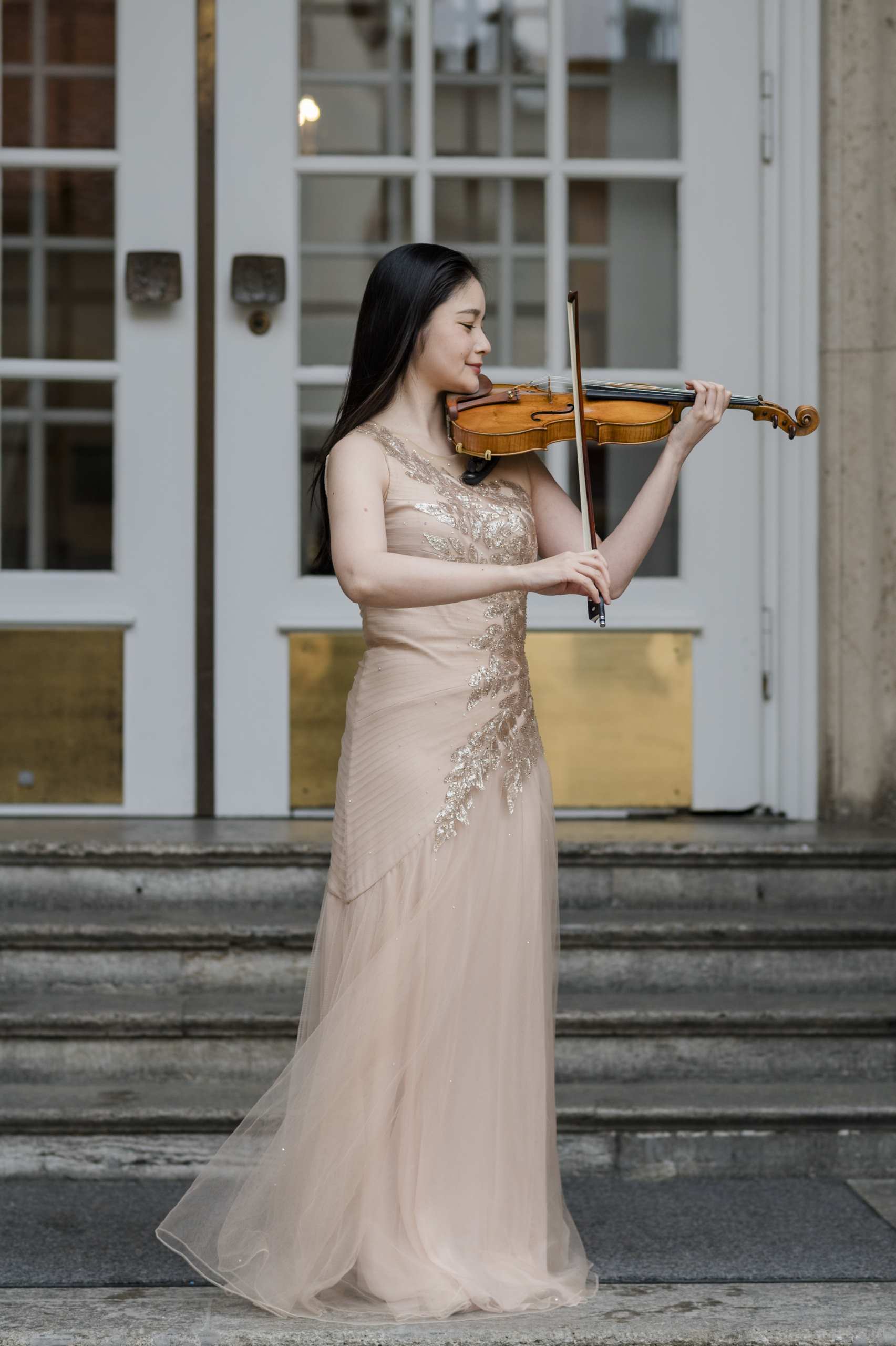
To draw closer to the human being behind the score, I have visited the places where composers lived and where their works were born.
To the shores of Lake Geneva, where Tchaikovsky wrote his Violin Concerto.
To places where Fauré and Mendelssohn once walked.
To the cities and houses where Bach, Mozart and Beethoven lived.
When I stand before a landscape a composer once saw, and encounter the light, wind, language and atmosphere of that same place, the notes on the page can cease to be abstract symbols. They begin to rise before me as the breath and memory of another human being.
After I performed Poulenc in France, an audience member said to me:
“You play as though you are speaking French.”
Those words have remained with me ever since.
Language, culture, landscape and music cannot be separated from one another.
Even in a celebrated work everyone knows, behind its beautiful melodies lie a composer’s conflicts, memories of loving someone, and the sorrows of people living through a particular age.
Learning that background can make a piece we thought we knew sound completely different.
When I speak between pieces, my aim is not to impart knowledge or teach a “correct way” to listen.
I hope simply to open the door to the music a little, and offer each listener a point of departure from which to feel and imagine freely.
Where words cannot reach
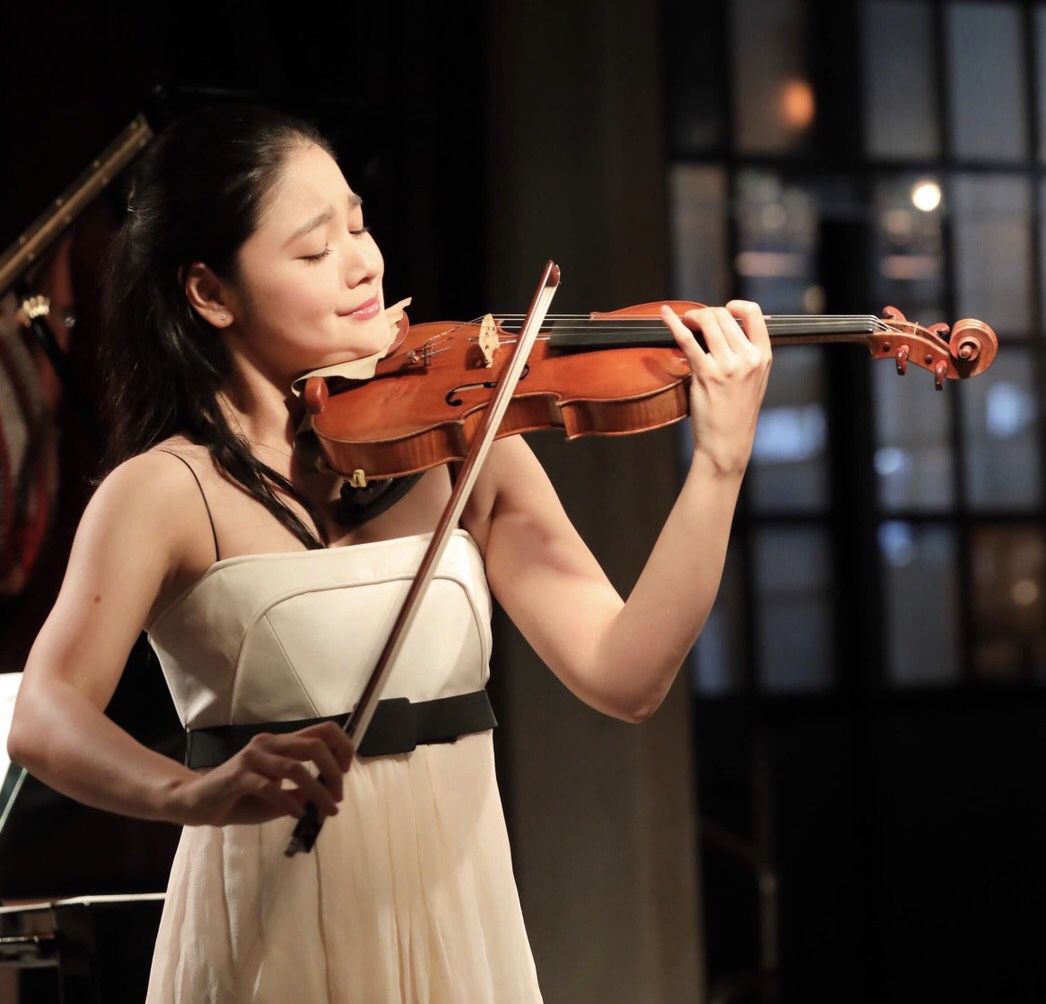
I have performed not only in concert halls, but also in hospitals and hospices, welfare facilities, centres supporting recovery from addiction, institutions for people with visual impairments, and places where people carrying memories of war and persecution come together.
There, I witnessed scenes I will never forget.
A person who had long closed themselves off emotionally began to weep while listening, and eventually smiled.
Someone who had been bedridden opened their eyes during the performance and exchanged words with their family.
I do not believe that I made a miracle happen.
Nor do I believe that music can change everything.
Even so, I have truly witnessed moments when music touched a deep place in the heart that words had been unable to reach.
Sometimes music reaches the heart before words can.
Having been sustained by music since childhood, these experiences renewed my wish to be, in turn, someone who brings music to others.
Music that can exist only in this place, with these people
Music changes according to the place in which it is performed and the people who are there.
Over the years, I have collaborated with artists from many disciplines, including painting, dance, traditional Japanese music and spoken-word performance.
I have also performed beyond the concert hall—in temples, churches, gardens, campsites and many other settings.
That is why, rather than bringing the same finished form everywhere, I first want to listen closely to the history of the place, the resonance of the venue and the background of the people who have gathered there.
From there, I shape the repertoire, spoken introductions and presentation to create the musical experience most fitting for that particular place.
In schools and outreach settings, I value time not only for listening quietly, but also for asking questions such as:
“What kind of landscape does this sound bring to mind?”
“What colours or animals do you imagine?”
I invite people to express freely, through words or pictures, what they have felt.
Music does not have only one right answer.
Each person can feel and think freely, while also listening to how someone else has experienced it.
I believe that this, too, is a vital form of dialogue created by music.
Carrying an inherited sound to someone new
I currently perform on a 1682 Nicolò Amati “Grand Amati”, on loan via Atsumari.
For more than three hundred years, this instrument has been passed from hand to hand among people living in many different eras.
I was drawn to this Amati not simply because its sound is beautiful.
It carries what I want to communicate more deeply and farther into the world.
I felt that it possessed this remarkable power to deliver something to another person.
I play music left by composers who lived hundreds of years ago on an instrument with a long history, and pass it on to people living now.
To perform is also to connect one person’s feelings to another across the centuries.
As one person within that long continuum, I hope to carry what I have received onward to someone new.
After the final note
Through music, we can encounter an unfamiliar culture or the life of someone who lived in a distant age.
We can try, if only for a moment, to imagine joys and sorrows different from our own.
I believe music can be a small doorway into that experience.
When we come to know something that was once unfamiliar, the distance between one person and another becomes a little smaller.
Beyond differences of language, borders, generations and circumstances, we can share the same moment.
That is why my aim is not simply to offer a beautiful performance.
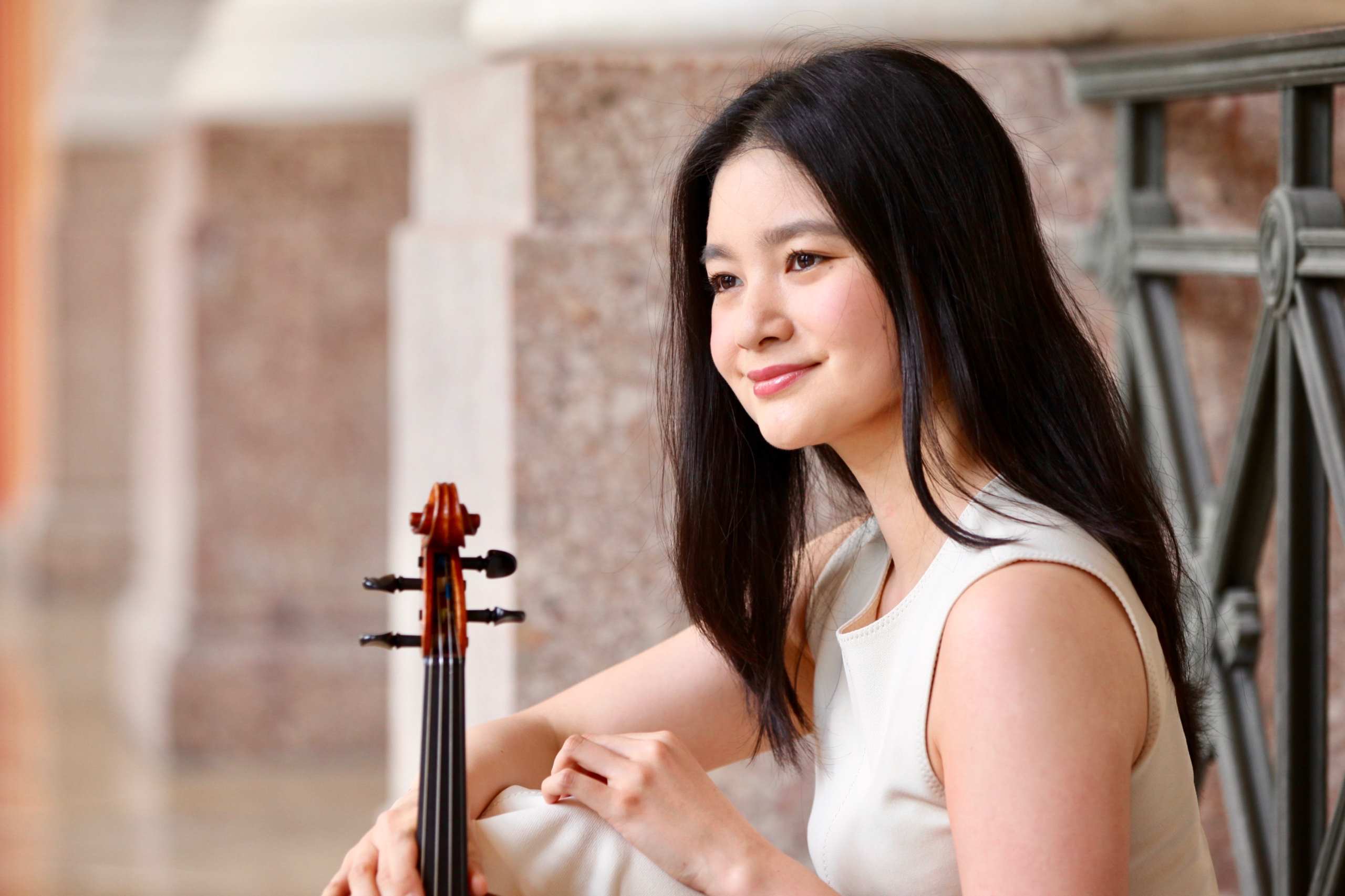
After the final note has faded, I hope the familiar world looks a little different from the way it did before entering the hall.
Perhaps someone has encountered something new and found new words forming within their heart.
Or perhaps their heart simply feels a little lighter.
That is the kind of time I hope to offer.
Ever since the day when, as a child, I delighted in seeing people smile as I played the violin,
my reason for performing has not changed.
To engage with music is to engage with people.
Let us create together the music that can exist only here, with these people.